
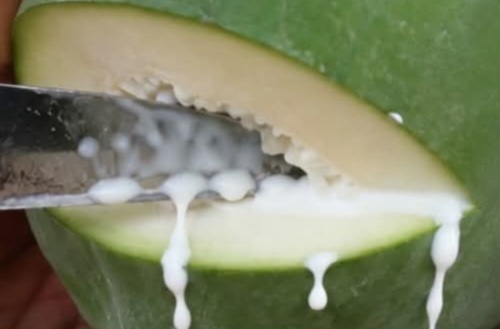
When you cut an unripe papaya, you may notice a thick white sap flowing from the fruit. That substance is known as papaya latex — and for generations, it has been valued in traditional medicine for its powerful natural properties.This milky sap contains important enzymes such as papain and chymopapain, which are believed to support digestion, skin health, wound care, and more. While papaya fruit is already famous for its nutrients, many people don’t realize the entire papaya plant can be useful — from the roots to the leaves and even the sap.
But because papaya latex is very potent, it should always be used carefully and in very small amounts. WhaIs Papaya Latex?Papaya latex is the white milky sap found in unripe green papaya, stems, and leaves. It is rich in natural enzymes that help break down proteins and organic material.The most well-known enzymes include:Papain – supports protein digestionChymopapain – traditionally used for inflammation and tissue careNatural plant compounds with antimicrobial and protective propertiesThese compounds are what give papaya latex its medicinal reputation.Health Benefits of Papaya Latex1. Supports Digestion NaturallyOne of the most popular traditional uses of papaya latex is digestive support. The enzymes help the body break down proteins more efficiently, which may reduce bloating and heaviness after meals.Potential digestive benefits include:Better protein digestionReduced bloatingImproved stomach comfortSupport for sluggish digestionBecause the latex is concentrated, only a very tiny amount is traditionally used.
2. Traditional Deworming RemedyIn many tropical regions, papaya latex has long been used as a natural remedy for intestinal worms.Traditional preparations often combine tiny drops of latex with honey or warm water for short-term use.Some believe the enzymes may help weaken parasites in the digestive tract. However, this remedy should be used cautiously and never excessively.
3. External Wound CarePapaya latex has also been used externally to help remove dead tissue from minor wounds or rough skin areas.The enzymes may assist in softening damaged tissue, which is why papaya extracts are sometimes included in skin-care products.Traditional external uses include:Cleaning dead skinSoftening thickened skinSupporting minor wound careAlways avoid applying it to deep wounds or sensitive areas.
4. Anti-Inflammatory PropertiesThe compounds found in papaya latex may help reduce swelling and irritation.In folk medicine, small controlled applications have been used for:Joint discomfortMild swellingInflammatory skin conditionsScientific interest in papaya enzymes continues to grow because of their biological activity.
5. Skin Treatment for Warts and AcnePapaya latex is sometimes applied directly to warts, acne spots, or tough skin patches because the enzymes help break down excess tissue.However, caution is extremely important because the sap can burn or irritate healthy skin.Traditional skin use:Apply only a tiny dropUse only on affected areasWash off after a short timeAvoid contact with eyes and healthy skinPeople with sensitive skin should avoid using raw latex altogether.
How to Prepare and Use Papaya Latex ProperlyFor DigestionTraditional preparation:Mix 1–2 drops of fresh latex into warm water or milkConsume occasionally, not daily

For DewormingTraditional method:Mix tiny drops with honey or warm waterUse only for a short period
Not recommended for children without professional guidance.For Warts or Tough SkinApply a very small amount directly to the affected areaAvoid surrounding healthy skinWash off after some time
Overuse may cause burning, redness, or irritation.Important Warnings About Papaya LatexPapaya latex is powerful and should never be treated casually.Avoid these mistakes:
 Do not consume large quantities Avoid use during pregnancy because it may trigger contractions Keep away from eyes and sensitive skin Do not use daily for long periods Always test on a small skin area firstIf irritation occurs, discontinue use immediately.
Other Parts of the Papaya Plant and Their BenefitsPapaya is often called a “complete medicinal plant” because nearly every part has traditional uses.Papaya LeavesPapaya leaves are widely valued in herbal traditions.Potential benefits include:Supporting immunityHelping digestionTraditional support during fever recoveryNatural garden pesticide when dilutedPapaya leaf tea and extracts are commonly used in many tropical countries.
Papaya StemThe stem also contains latex and beneficial plant compounds.Traditional uses include:Medicinal extractsCompost enrichmentOrganic farming applicationsThe decomposing stem can contribute nutrients back into the soil.
Papaya RootsPapaya roots have been used in traditional herbal practices for:Digestive supportUrinary wellnessHowever, roots are considered very strong and should be approached cautiously.
Bonus Farming Benefits of Papaya LatexFarmers have discovered that papaya is useful beyond nutrition.Agricultural benefits include:Diluted latex may help deter pestsPlant waste enriches compostOrganic matter improves soil microbial activityLeaves and stems break down into nutrient-rich fertilizerThis makes papaya valuable in sustainable gardening and natural farming systems.
The Truth Farmers Should Know About PapayaPapaya is far more than a tropical fruit tree.From the roots to the leaves to the white sap, almost every part of the plant has traditional value. Whether used in natural farming, digestion support, or folk remedies, papaya continues to be respected in many cultures around the world.Final ThoughtsPapaya latex is one of nature’s most powerful plant substances — but with that power comes responsibility.Used carefully and in tiny amounts, it has long been appreciated for digestive support, skin care, and traditional wellness practices. At the same time, misuse can cause irritation or unwanted side effects.The real beauty of the papaya tree is that almost nothing goes to waste. It serves as food, compost, natural farming support, and traditional medicine all in one remarkable plant.